
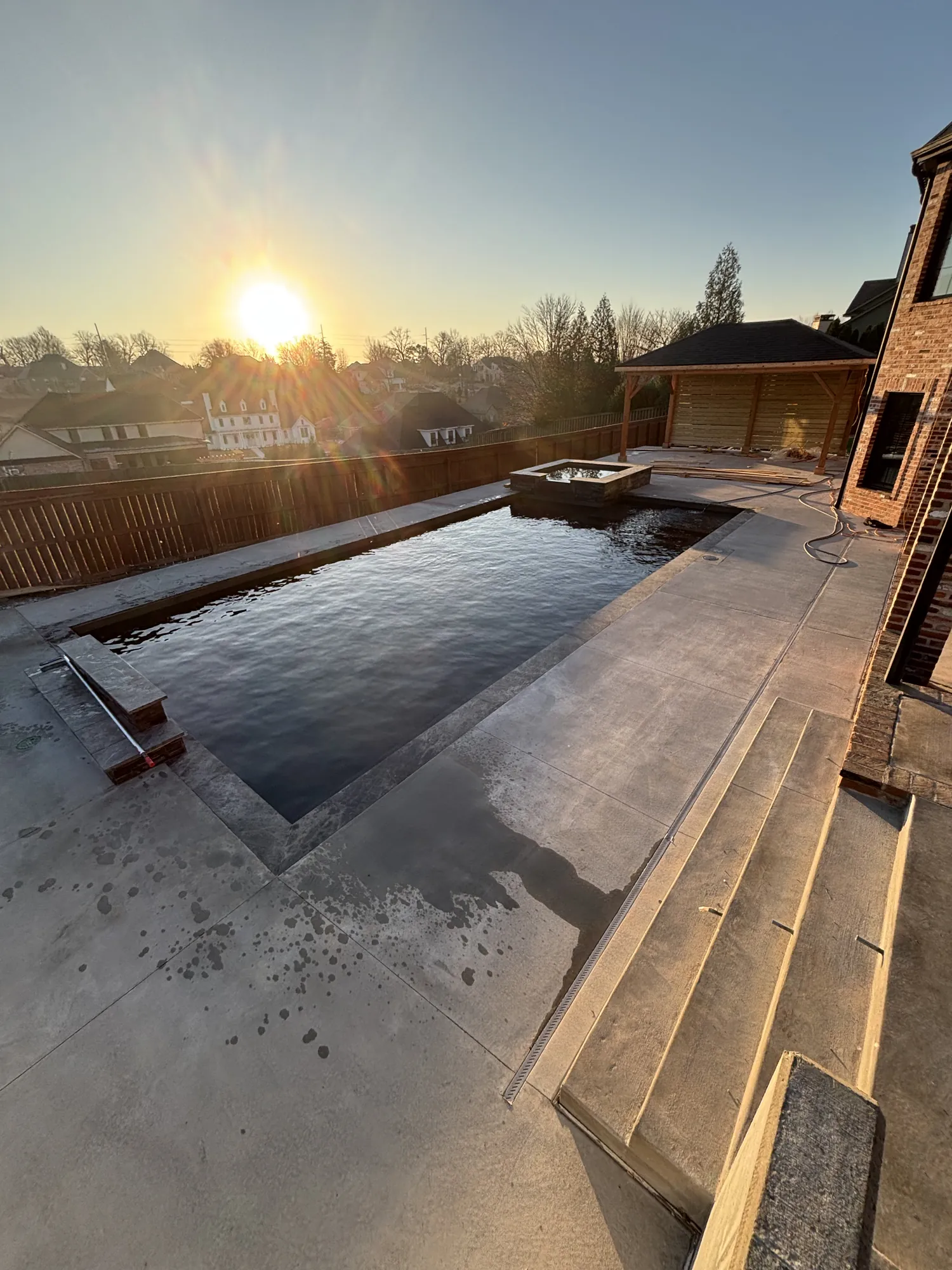
When to Close Your Pool in Northwest Arkansas
Every fall, Northwest Arkansas pool owners ask the same question: when is the right time to close the pool? Close too early and you can open a green pool in spring. Close too late and you're fishing out leaves, or racing a hard freeze.
There's no single date that works every year. Our weather swings too much for that. A handful of signals will tell you when your pool is ready, though, and we'll walk through them here for Bentonville, Rogers, Fayetteville, and Springdale.
The short answer
For most NWA pools, the closing window opens once water temperature stays below about 65°F and closes before the first hard freeze. That usually lands somewhere between mid-October and late November, depending on the year, your yard, and how much you still use the pool or spa.
The 65°F number is a common rule of thumb, not a hard rule. Here's why it matters.
Signal 1: Water temperature (the big one)
Algae loves warm water. When your water is still in the 70s, algae and bacteria keep growing, and they keep eating chlorine. Put a cover on warm water and you've built a dark, still, warm greenhouse. The sanitizer you added at closing gets used up early, and by spring you're looking at a swamp.
When water stays consistently below roughly 65°F, algae growth slows way down, and your closing chemicals last much longer under the cover. Notice the word consistently: one cool morning after a cold front doesn't count. Fall weather here loves a warm spell, so you're looking for a trend that holds through a week of normal weather.
How to check: use a floating pool thermometer, or read the water temperature on your automation app or heater display if you have one. Check in the afternoon, too. If the water is still climbing back into the upper 60s or 70s on sunny days, it's not ready yet.
Signal 2: Leaf drop
If you live near trees, and in the Ozarks most of us do, leaves may set your timeline more than the thermometer. Our oaks, maples, and hickories usually drop the bulk of their leaves from late October into November, though it shifts from year to year.
Leaves cause real problems in a pool:
- They clog skimmer baskets, pump baskets, and filters.
- They release tannins that can stain plaster and pebble finishes, especially if they sit on the floor for weeks.
- They eat up chlorine as they break down, which feeds algae.
Many owners near heavy tree cover either close a little after the worst of the drop, or keep the pool running and skim hard until the trees are mostly bare and then close. Either way works. What causes trouble is closing with a layer of leaves already on the floor.
Signal 3: The first freeze
In Northwest Arkansas, the first freeze typically arrives in late October or November. Some years it's earlier, some years later, and low spots and valleys often freeze before hilltops and town centers. Your own yard may run colder than the forecast for the nearest city.
The freeze matters because water expanding in pipes, pumps, filters, and heaters can crack them. A running pump protects the system (moving water is much harder to freeze), and a properly winterized system protects it too. A pool sitting in between, shut off but not winterized, is the one that gets hurt.
Keep an eye on the National Weather Service forecast as fall goes on. If a hard freeze is coming and you aren't ready to close, keep the pump running through the cold nights.
Closing too early vs. too late
| Closing too early | Closing too late | |
|---|---|---|
| Main risk | Algae growing under the cover in warm water | Leaves, staining, and freeze risk to equipment |
| What you see in spring | Green or cloudy water, extra cleanup and chemicals | Stains on the finish, debris on the floor |
| Hidden cost | More chlorine and algaecide to recover | Possible repairs to cracked plumbing or equipment |
| How to avoid it | Wait until water stays below ~65°F | Watch the freeze forecast and leaf drop |
If you have to miss one way or the other, late is usually easier to manage, as long as the equipment keeps running through any freezing nights and you keep up with skimming.
The other option: keep it running all winter
Northwest Arkansas winters are milder than in a lot of the country. Many days get above freezing, and long stretches of hard cold are uncommon. That's why some owners here never fully close. They run the pool through winter with freeze protection instead.
Here's how that usually works:
- Freeze protection is built into many variable-speed pumps and automation systems. An air temperature sensor turns the pump on when it gets near freezing, so water keeps moving through the pipes and equipment.
- You keep the chemistry balanced all winter, though cold water needs far less sanitizer than summer water.
- You keep skimming leaves and debris, and you may run a solid or safety cover between uses.
This approach is popular with families who use their spa through the winter. A hot soak on a cold night is one of the best parts of owning a pool here.
Running all winter has a real weak spot: power outages. Freeze protection only works when the pump has power, and winter storms and ice can knock power out right when temperatures are lowest. If you go this route, know how to drain your equipment quickly, or have a plan for long outages. Also confirm your freeze protection is actually set up and tested, not just a feature listed on the box.
Your power bill will also see winter run time. A properly programmed variable-speed pump can keep that modest, but it isn't zero.
A simple way to decide
Close the pool when all of these are true
- The water has stayed below roughly 65°F for about a week.
- Most of the leaves are down (or you've decided to keep up with skimming until they are).
- You're done swimming for the year and won't be using the spa.
Keep it running with freeze protection if
- You plan to use the spa through winter.
- Your pump or automation has freeze protection and you've confirmed it works.
- You're comfortable with winter chemistry checks and a plan for power outages.
Either choice is fine if you do it on purpose and do it fully. Pools that sit half-closed through a cold snap are the ones that get into trouble.
Ready for the next step?
Once you've picked your timing, our guide on how to close your pool for a Northwest Arkansas winter walks through the checklist step by step.
If you're thinking about a new pool, or wondering whether your current setup could handle winter better with the right equipment, Chris, Marsha, and the Advanced Pools & Spas team are happy to talk it through. We design and build custom in-ground pools across Bentonville, Rogers, Fayetteville, and Springdale, from design to build to finish, so you can enjoy it. Call us at (479) 442-7717 or request a quote.